Showing posts with label hifi. Show all posts

Monday, February 23, 2026

Relaxing revelations


Last week was a bit messed up in a number of ways so we're catching up and at the same time trying to relax a bit so I did play a couple of records one being a Bay City Rollers album from the days I had lots of clippings, posters and scarfs of theirs.

Given my super audio cd player spends over 80% of its time playing regular cds I recently changed the external digital to analogue converter that takes the noughts and ones from the transport in the player to improve on its sound.

I've had cd since 1986 so not surprisingly some my cds go back a long time and some have had a number of cd releases so how would you know what's worth keeping as we tend to remember how something sounded but not necessarily take account of what we heard it on.
This variant of the first Duran Duran album was from 1985 to the early 1990's the international cd release of the album which saw To The Shore removed and the 1983 single Is There Something I Should Know? added as track five (and last track on side one on the US/Japan lp) 

In 1993 a version that restored To The Shore was issued in Europe with a newer mastering issued but to my ears it seemed to lack "attack" and subsequent issued in 2003 and 2010 worse.

The usual criticism of that first cd issue was that sounded bright and that 1983 single was mastered a bit louder than the rest of the album and I can remembering how it sounded on my original Toshiba player.

Putting it in the super audio cd and playing from the new external digital to analogue convertor was a revelation as it didn't sound bright, there was an obvious bass line and Simon Le Bon's vocals had great presence.

I even heard clear soundstaging!

Actually I had to pinch myself that I wasn't hearing a record playing it was that good correcting that level issue while playing it.

Actually this was a really good sounding cd ONCE you corrected the level mismatch and took advantage of the advances in digital technology.

Now it won't sort a bad cd out but it certainly will bring out everything that the disc has and that for generations we assumed it never had.

Monday, September 29, 2025

Testing the system

 With other sad news from within the group in this Saturday afternoon that I may comment on later on in the week when I've crystalized my thoughts, thoughts this weekend were more with setting up the hifi, something I've had to get my head around from my mid teens when I first had separates albeit hand me downs and quality used equipment.

Thins like the Tuner are easy to check, it either gets stations clearly sounding good or it doesn't but things like tape decks and record decks normally need a bit more work and often have specific resources you use with it to check and reset matters.

This is what is called a Test Disc which is basically a record with tests to check the arm is set up correctly, speed is spot on, the left channel really is coming from the left and so on.

They are still available new, a sign of the interest in good vinyl reproduction that some expected to go the way of the Dodo by the end of the 1990's but this is one from 1979 from the magazine HiFi For Pleasure  that I used to read and made for them by PYE Records to their specification.

It's very similar to what I had then and recently I came by a used copy which is useful as the instructions are easy to understand so I used to check and reset my turntable with this weekend.

Now what we need is brand new Cassette Test Tape!
 

Monday, October 14, 2024

Improvements at the sharp end

We're an issue away from an anniversary here, recovering from this flu thingy and one thing that has run from the early days of this blog wrapped around all the things around being, presentation, age dypshoria/regression has been music and to be specific the evolution over the decades of how I hear it.

Records do play a fair part in that although the way things go is hat some recordings may not be on record but say compact disc and some often older albums may not of had (or had less than satisfactory) an issue in that format.

Thus the record deck itself has had upgrades from simple automatic models of my youth to more complex hifi models that play just one disc at a time.

Also the cartridge and stylus have had changes to with them of getting more out of what is in the groove and less of what isn't such as surface noise from the disc itself.


Recently I bought this which offers in a sme bayonet style form a clearer modern cartridge body to which a nude eliptical stylus is fitted to better fit the groove and extract more information.

Compared to others it is a better match for the arm with less lower mid resonances that however slight can make themselves heard.

This sounds just great through my phonostage that takes its output and raises it to play though the amplifier much better than its own built in one.

Monday, September 2, 2024

Back to class with tape


Funny old week in a number of ways as the post F.A. business has resolved itself so things have gotten more to back to normal and I get ready to be away this weekend so i'll be sorting stuff out for that and obviously school returns which tugs at me never really have mentally at least left that.

Having fixed the power unit issue on my Sony portable stereo recorder I have been continuing with remaking a number of tapes that went around 1997-9 when MiniDisc moved in and pushed its predecessors and their tapes out, not least as I couldn't operate the Tandberg 62 stereo reel deck.

Back in the days you had a variety of tapes you could use and some could be difficult to use to their best because the coating wasn't what most Japanese tape manufacturers used and Japan set their machines based on what what they made. 

Many pre-recorded cassettes used Basf genuine chromedioxide tape as it not only sounded really good but it was really quiet and in the early to mid 80's I did use their domestic blank tape version as it least the machines I had then did a decent job of recording on them.

What did for that and lead me to switch to Maxell XLII  and TDK SA was changing machines to Japanese machines that sound bad on them and because of the impact of that, reduced availability in the high street.

In 1993 I did try one Basf Chrome type as an experiment and that didn't turn out well as the volume as a lot lower than what I recorded it at.

Recently though in a bundle of mainly Japanese tapes I found some late 90's early 2000's ones and I did experiment with them.

While these were mainly pure chrome they had added a small amount of  cobalt oxide japanese type II tapes used and actually they worked well straightaway on one of the Yamaha decks from the mid 1990's keeping much of the the low noise advantage I liked.

So with that I redid Bruce Springsteen's Born To Run and Darkness On The Edge of Town albums given I like listening to his albums rather a lot.


Monday, July 17, 2023

Adding extra programs to the Hifi

Today's post is a little different to going into a major addition in part of my stereo system that had remained constant for a good decade or so.

There is a longish history to putting together a hifi system and usually I tried to get matching amplifiers and tuners at least visually if not by manufacture rather than the more commonplace two in one of a "receiver" in North America simply because you requirements of the amplification may be  in excess of you needs of the radio unit aka a "Tuner".

For me that translates as having great stereo FM for services such as BBC Radio Three but not needing a lot of presets and while AM reception is useful I normally use a quality portable for things like TalkSport Radio and the like.

With the first full system a RA313 amplifier was matched to a fairly simple manual tuned tuner  and when that after some sideways moves that didn't quite work out I got a hot rodded Rotel RA820B, I bought the matching RT820L that offered long Wave for Radio 4 but again manually tuned.

One thing that has increasingly come into things is both the closure of many medium wave stations such as local radio stations and newer stations not being on the traditional frequencies and services that covered.


The first thing to say about the Tangent Tuner II is it's quite a bit smaller and has two different wavebands on it.

The first is VHF/FM which first arrived on the scene here in 1955/6 after some experiments around how the signal was modulated and from the late 1960's stereo multiplex transmissions were added.

The other is more recent and that is Digital Audio Broadcasting, usually abbreviated to "Dab" which in reality is VHF Band III and digital broadcasting using two differing coding techniques that was initially launched as an experimental service in 1995 and for which most stations are transmitted on the same frequencies around the country to help boost reception.

From new the first thing it does is scan for all available stations and up to six may be stored as favourites and you can turn the navigate knob to move to the station you wish and press it in select it.

There is a period of change and a good deal of instability around if the VHF/FM service will remain or indeed if both will be replaced by internet streaming at home and on Smartphones while out.


Part of that is around concerns over the technical quality of the signal - some broadcasters are using relatively poor sounding mono - favouring more stations rather than higher fidelity although this model has an output so for better stations you can route the digital signal to a higher quality digital to analogue convertor for the best possible sound which is what I have done using my SMSL SU-9 via a QED Reference series optical connector apart from the traditional RCA line outputs you connect to an amplifier to.

In that way it does cover all bases as today there is very little on the Long and Medium wave A.M. bands that is exclusive in the way that in the era of my childhood you had to listen to Radio Four Long Wave for test match and Radio One on Medium wave only for your chart pop music with fading and whistles from nearby televisions line timebase's affecting reception.

Digital does bring silent backgrounds so you can here the coughing of the audience in a live concert to a silent background and better high frequencies compared to the A.M. and as slowly broadcasters upgrade the sound as Classic FM are planning to do come next January more of its potential will be realized.

Monday, March 22, 2021

Classical Music sacd Round up 17 - The Planets are sorted

This week one we may of found the answer to the great collecting chase of where is the best Super Audio cd of the one work you'd of thought there would of been.

Let's face it, Hifi types love to show off just how low their systems low notes go, the almost bat ear high notes matched by ink blank silent backgrounds  all brought by the latest recording and reproduction technology.

From those early days in the 50's with the new fangled lps that spawned the hobby with a high quality playback source rather than 78's and AM radio people had then, the explosion that followed stereophonic sound on being on record, radio and tape to the cd and the you are in the room feel multichannel sound can offer one work has always figured in demonstrations.


This just might be the Batastic super audio cd that matches the finest performances from the days of analogue tape with superb multichannel super high quality sound.

This does offer playing to equal my much loved imported Shm regular stereo cd of the 1971 Boston Symphony recording  by William Steinberg which was originally engineered for Quadraphonic multichannel sound just beating the previous sacd go to, the Andrew Davis recording which is part of his four sacd series of Holst's other sadly neglected works.

The Elgar is an enjoyable piece you do benefit from having a 'spare' version of too even if as a coupling another piece by Holst would of been ideal.


Monday, December 14, 2020

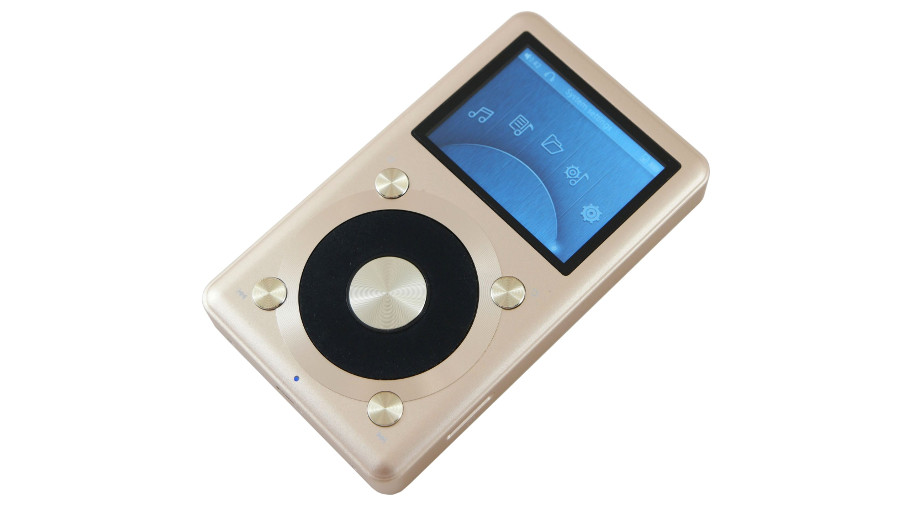
The Fiio X1 Mk II

We are almost ready for Christmas with appoint fixed with the Fur Cutter tomorrow to get that under way and the stuff I need for other peoples Christmas here.


I've been recently road testing a small thin digital audio player as mine are a few year old and a bit chunky.

This, the Fiio X1 mkii is thinner than my original X1 and has a different rotary encoder to move though the menus such as songs, artist, folders, albums, playback settings and system set up.

It is more positive than the original X1 but as it uses touch it can and does overshoot at times so it's often easier to use the << and >> buttons to navigate.

The output socket, micro sd card slot (it has no internal memory) and micro usb fit at the bottom of the unit.

The display is a basic 320x240 but adequate and can be turned off by one light press of the power button on the side while the output can be switched from headphones to a line out for  stereo system or portable headphone amplifier such as Fiio also make as some headphones do need more output than many devices natively can provide.

The line output has a number of built in level adjustments you can apply that can help if the output is such you can hardly turn up the volume without it being too loud which is sensible.

This handles all the major audio file formats such as Flac, Apple's Alac, Aac and the evergreen Mp3 but the one issue that there doesn't seem a cure for is sometimes it doesn't do gapless replay correct putting even a tiny space in or a click sound which may be a distraction on music that has lots of parts that segue into each other such as things by the Pink Floyd or live concerts although it isn't as bad as my old Sensa Clip+ used to be in 2010 for it.

Unfortunately there hasn't been any new software updates that may of cured that.

It's fine for playing compilations or most studio albums where it does sound very good for the money but not a first choice for prog rock or live rock concerts where its gap issues do take the edge of seamless songs.

Monday, August 14, 2017

Upgrading my stereo

It's been a while since I posted anything major  around how I enjoy one of my big interests, music, since the last addition was replacing the Turntable a couple of years back to improve the sound of my records and getting a quite remarkable amplifier to take that sound loud enough to fill the room when driving my loud speakers.
It may seen an odd topic to post on a middles blog but as music and what I have heard it from has been an interest from around the age of nine getting involved across actual childhood in building up stereo systems it's a valid part of age regressed life for me.
I have three main sources of recorded music, records which was what I grew up with, compact discs that after a brief period with pre-recorded cassettes I moved to in the mid 1980's and downloads increasingly lossless and so-called high definition better than cd ones at that.
The last cd player was a 1994 model by Rotel which was a high quality model bought as a stop gap when it's predecessor had a sudden death in April of 2013 but I had been hankering for something better for a while and I spotted this reconditioned and warranted that appealed.
Enter the Marantz SA 7003 

It's a compact disc player with a difference: it plays the physical form of high definition recordings known as Super Audio Compact Discs (sacd) of which I had a good number as mine had a layer for regular cd players and the super audio cd layer that I have bought over the years for the excellence of their regular cd layer sound.
The main benefit of such recordings isn't that the highest notes are more extended although they can be, it's that because the use more smaller samples of analogue sound when it reassembles it it is that much more accurate and smoother.
 

It has a few sockets on the back you need to wire up and being a very quality piece of equipment these are gold plated having the line outputs to couple to your amplifier, digital outputs for either digital recorders or external conversion of its digits to sound and a twin pin IEC ("kettle") socket for the mains lead.
That was fun as one wasn't included and  didn't have a spare at hand, so being only familiar with 'figure of eight' and three pin IEC ones I wasn't sure I needed to order a special lead up but as it happens you can use a three pin lead on a device with the IEC socket in two pin form.

One big improvement on many players is the draw that holds the disc is not floppy plastic like some cheap computer dvd drive but is solid and is designed to reduce vibration when it spins the disc. The case is also well made with plenty of metal.
The internal electrics use good quality components Cirrus digital to analogue convertors and high quality modules for taking the sound and sending that through the outputs. 
Originally this player had a suggested retail price of just over £600 being seen as a middle market model within Marantz's range offering something from the more expensive range for those who could afford something better than a basic regular player.
Having had this  for a few days on both super audio cd and regular discs the improvements in disc transport and conversion of those digits to sound is certainly amongst the best I've ever heard, sounding more life-like.

Monday, April 3, 2017

Portable music redux

As mentioned Friday, something of mine did die on me a week ago that I  wrote about in January 2013 Here
This Sandisk Clip Zip  music player developed a couple of faults one being being unable to recharge the internal battery from a charger and the second being over 70% of the time it would not be recognized by my Windows Laptop so I could neither charge it from that nor add music to it. 😒
Bit of a problem, what?
I was looking at possible replacements as that manufacture has in many ways lost real interest in new players plus as no longer use exclusively Windows computers (Up with Linux!) something that doesn't reply on a Windows or Apple program to use it.
Recently the Chinese company Fiio discontinued its 2014 X1 player for the X1 Mark ii with blue tooth and a different round scrolling wheel which meant there were  number of the older players on the market both new and some used  and I was able to find one used in excellent condition  for little more than what I paid for the Clip Zip in late December 2012 which is quite a step up from that model.
Removed from its rubberized protective jacket, you can see a bigish 2.4 inch screen showing the menus you navigate using a scrolling wheel, an okay/confirm button in the centre and a back key on the top right. It may be a little old-fashioned in an age of touch screens but hey! it works and is easy to understand.
The bigger screen helps with album art often included in commercial downloads or those you might have on anything you've copied from cd yourself without the size and format restrictions that were trying.
Talking of formats without getting super technical, it'll play Mp3's from the likes of Amazon, AAC files as loved by iTunes and also used by 7digital and lossless "full cd quality" ones in Flac (Free Lossless Audio Codec) and Alac (the same thing but by Apple) other stores supply.
It also includes the ability to play 24 bit so-called High Resolution audio files some stores and artists offer should you have any which as it happens I do as they can sound better than regular cds even.
The headphone output is noticeably better, able to go louder easily when the music requires it without sounding strained and will drive most headphones very well as is.
The real beauty of this is by selecting it on the menu, it can output a very high quality 'line level output' to connect to a stereo system as if it was a audio component so you could use this like cd player except for playing your music files you might of bought from iTunes from instead without having your computer on.
On the right side of the case is a Micro SD card slot because this play has no internal memory but uses these popular and ever cheaper memory cards which means you can make a series of cards up by music types for example and just swap them over.
In Fiio's players you insert the card writing side toward the back of the player rather than the front. Presently it can take upto 128gb cards although cards over 32gb need to be 'formatted' using the formatting tool in the player before first using them to put your music on by just dragging and dropping the folders to the card.
Although it lacks a FM radio, something I do like for listening to shows like BBC Radio 4's "The World at One", this is a really good replacement for that no longer working Sandisk player.

Friday, September 9, 2016

Cleaning time

Funny kind of a day yesterday with lots of showers  and intermittent sun so I didn't get outdoors which wasn't my idea of fun at all but there was something I decided to do outside of a bit of colouring.
Anyone who has records know like a cd,  they can get a bit dirty but while you only normally tell if a cd is dirty if say it skips, with a record you may hear crackles or a rustling sound even if it looks clean because while surface may be, the groove the music is stored in, isn't.
So it isn't long before you start looking at how to clean it, often scratching ones head as you see anything that looks like a automobile windscreen wiper to big machines costing several hundred pounds being offered that proper to do it
I have tried many ways to do it, sometimes mixing my own cleaning mixture up but there's a simple kit that just does it and it's inexpensive cos you provide the elbow grease!
The Vinyl Revival cleaning kit available on Amazon and Ebay provides all you actually need in simple box.
You get two spray bottles available in different quantities one being the active cleaning solution that you spray on to the disc and wipe on, the other is a spray to rinse that off taking the dirt and dust away together with any trace of the cleaner, wiping it dry.
Between two to four sprays of each work out fine.
The cleaner doesn't contain any alcohol so doesn't dry or risk damaging through frequent use your records vinyl.
It comes with two cloths, although you buy spares easily, the green one is for putting your record on and the blue one has even thinner micropores for spreading the cleaner and applying after rising it off.
I find this very effective, using it to cure the rustling noise between tracks on my recently acquired Abandoned Luncheonette lp from the early nineteen-seventies leaving sounding quieter than some new records!

Friday, August 12, 2016

The "ShallowMemory special" phono cartridge part II

Way back in 2013 I wrote  a bit about how for those of us who use turntables that use removable (SME) type headshells we could have a easy to fit and install cartridge for getting the music on our records  to our amplifiers phono input so we could enjoy.
Link:
The shallowmemory special phono cartridge

To recap, the long bit from the screw in fitting to the tip where the red dot is comprises of the Ortofon Concorde Pro cartridge usually seen with a robust stylus for dj work such as scratching but by fitting a more home Hifi type stylus and setting the downforce appropriately, we can get a great sound knowing unlike mounting a conventional cartridge into a headshell this it well perfectly aligned geometrically for optimum performance at the factory.
Following changing the record deck recently and the main amplifier, I had heard a good deal more detail coming from it and three years on was thinking about at least getting a new stylus for it as they do wear in time.

What I was interested in was getting was a stylus that was a more accurate fit to the groove in the record so fine detail would be clearer especially on loud tracks toward the end of the record that would just push on so I'd use the older one for, say, 45's and testing used records with and this the better one for albums.
*Fitted and playing Tom Petty's Greatest Hits (Universal/ Geffen  records)
When fitted and set to around 1.6 grams downforce, it gives cleaner sound on 'hot' cut albums and less surface noise provided obviously you've cleaned your records plus copes with those last tracks on the side better.
Although expensive it gives a performance comparable to Ortofon's 2M Blue but without the complications of mounting and aligning it properly in a separate headshell which, believe more many forests have been written with charts and print out protractors to use!
School geometry did have a practical application after all!
Now to continue cleaning out a jammed email inbox brought to my attention by Lucy last night!